Each November, the night sky offers a quiet bit of magic as the Leonid meteor shower returns. It might not be the brightest of the year, but there’s something captivating about spotting those quick, silvery streaks as they flash across the sky!
The Leonids come from tiny bits of dust left behind by Comet Tempel–Tuttle, a small comet only about three kilometres wide which orbits the Sun every 33 years. It was discovered back in the 1860s by two astronomers, Ernst Tempel and Horace Tuttle, who each found it independently – hence the double-barrelled name! 💫🔭
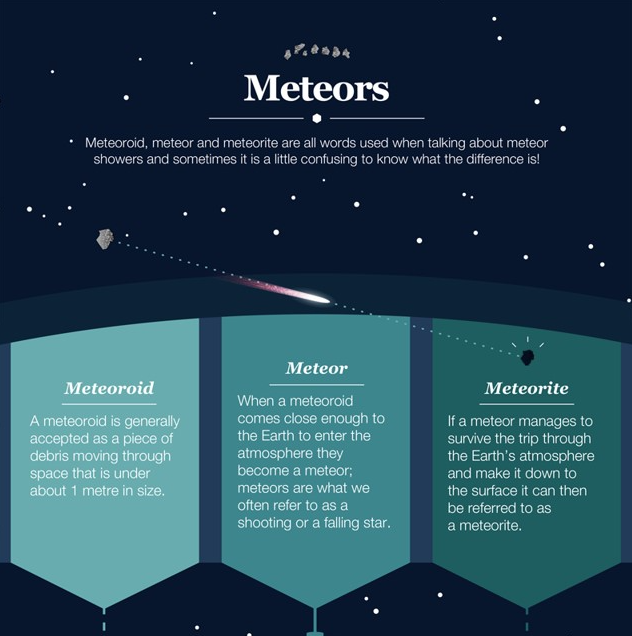
The comet last passed by in 1998 and will be back again in 2031, but its trail continues to fill our skies every year. When Earth crosses through that trail, the particles burn up high in the atmosphere, creating the familiar flashes we call meteors. In a bit of a muddle about what’s what – meteoroid, meteor, meteorite?? We have a handy infographic below that should help.
This year, the Leonids will peak overnight on 17–18 November, with around 10 to 15 meteors per hour. The waning crescent Moon will set before midnight, so skies will be nice and dark. And with the clocks having gone back, you can start gazing before dinner! 🌘
Here at Cocklebury, we think there’s no better place to enjoy it. Our dark skies and private gardens make the perfect setting to settle in with a blanket and a hot drink while you watch the magic of the night unfold. Or, if you’re staying in one of our stargazing shepherd huts, you can simply lie back in bed and look up through the skylight, letting the night sky put on its show.
The Leonids might not steal the headlines like the Perseids or Geminids, but they have a charm of their own, perfect for an Autumnal evening enjoying good company around a firepit. 🔥🍂


Leave a Reply